
7 steps to Teaching Kids the Law of Attraction: Avoiding a Life of Negativity

Teaching kids The Law of Attraction, a philosophy rooted in the belief that our thoughts, whether positive or negative, significantly influence our life experiences, extends its relevance beyond adults to the formative minds of children.
Introducing this principle to young ones not only enlightens them about the power of mindset but also equips them with tools for positive thinking and self-empowerment from an early age.
This article serves as a comprehensive guide for parents and educators, detailing methods to teach the Law of Attraction to kids effectively, backed by studies and expert insights.
Navigate to What Matters
Understanding the Concept and Its Benefits for Children
When adapting the Law of Attraction for children, it’s crucial to distill it into a simple yet profound truth: our focus shapes our reality.
In essence, “positive thoughts lead to positive outcomes.”
This simplified interpretation is more than just a catchy phrase; it’s supported by psychological research and educational theories.
Advantages of Teaching the Law of Attraction to Kids
- Enhanced Emotional Intelligence: Studies have shown that children who practice positive thinking develop better emotional regulation skills. According to a study by Dr. John Gottman, children who are taught to understand and manage their emotions exhibit greater empathy and social competence.
- Improved Academic Performance: Research by Dr. Carol Dweck on ‘growth mindset’ aligns with the principles of the Law of Attraction. Her work demonstrates that children who believe in their abilities and think positively about their learning are more likely to excel academically.
- Resilience Building: The Law of Attraction encourages a mindset of resilience. A study led by Dr. Angela Duckworth highlights how positive thinking and perseverance (referred to as ‘grit’) play a crucial role in long-term success.
- Enhancing Creativity and Problem-Solving: Positive thinking, as encouraged by the Law of Attraction, can lead to enhanced creativity in children. A study by Dr. Barbara Fredrickson shows that positive emotions broaden an individual’s attention and thinking, leading to more inventive problem-solving.
Incorporating Research and Expert Opinions
To effectively convey these concepts to children, it’s essential to integrate findings from various studies and theories.
Renowned psychologists and researchers such as Dr. Martin Seligman, known for his work in positive psychology, provide valuable insights into the impact of optimism on child development.
Similarly, referencing educational experts like Dr. Alfie Kohn, who emphasizes the role of intrinsic motivation and positive reinforcement in learning, can add depth to the teaching approach.
This article will explore these facets, offering a blend of theoretical knowledge and practical applications, to guide parents and educators in nurturing a generation of children who are not only intellectually capable but also emotionally intelligent, resilient, and positive thinkers.
1. Start with the Basics, Teaching Kids the law of attraction
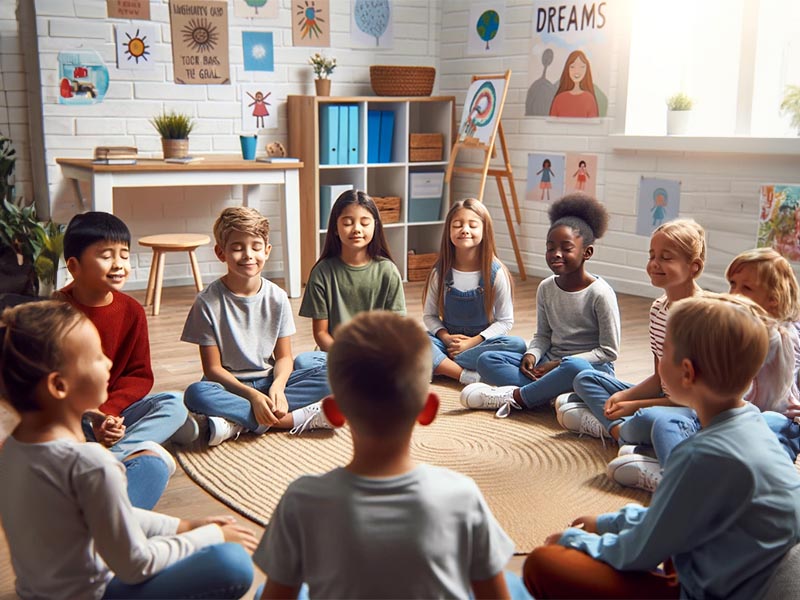
Begin by explaining the power of thoughts and feelings. Use age-appropriate language and examples, like how thinking about a happy event can make you smile. Teach them that their thoughts are powerful and can influence what happens around them.
2. Visualization Techniques
Kids have vivid imaginations, making them natural at visualization. Encourage them to visualize their goals or dreams.
This could be as simple as doing well in a school play or making new friends. Guide them through a visualization exercise, where they imagine achieving these goals and how it makes them feel.
3. Positive Affirmations
Introduce them to positive affirmations. These are short, positive statements that they can repeat to themselves. For example, “I am smart,” “I am loved,” or “I can do anything I set my mind to.” Encourage them to say these affirmations daily, especially when they’re feeling down.
4. Gratitude Practice
Gratitude is a key element of the Law of Attraction. Teach children to be grateful for what they have. This could be through a daily gratitude journal or sharing what they are thankful for during family meals.
5. Dealing with Negative Thoughts
It’s important to teach kids that negative thoughts are normal, but they don’t have to control their lives. Help them understand how to acknowledge these thoughts and then shift their focus to something positive.
6. Real-Life Examples
Use stories or real-life examples to illustrate how the Law of Attraction works. This could be a story of someone who achieved their dreams through positive thinking or even examples from their own lives.
7. Interactive Activities
Engage them in activities that reinforce these concepts. This could be art projects, vision boards, or role-playing scenarios where they practice responding positively to different situations.
Conclusion: Shaping Tomorrow’s Thinkers – The Impact of Teaching the Law of Attraction to Kids
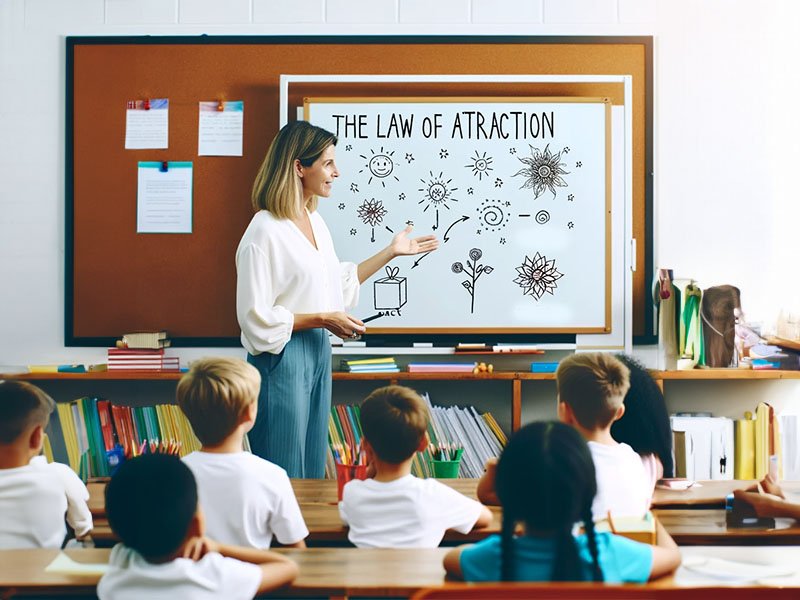
Educating children about the Law of Attraction is more than a lesson; it’s a transformative journey that enlightens them on the profound influence of their thoughts and feelings.
This educational venture is not just about fostering a positive mindset but also about empowering young individuals to recognize their ability to shape their own realities.
When approached with patience, creativity, and a deep understanding of child psychology, this journey can be an enriching and enjoyable experience for both the educator and the child.
Incorporating the principles of the Law of Attraction into a child’s learning process has the potential to leave a lasting imprint on their cognitive and emotional development.
Renowned psychologists and educators have underscored the significance of positive thinking in children’s growth.
For instance, Dr. Martin Seligman’s works on optimism and its effects on children’s mental health provide a solid foundation for these teachings.
Dr. Carol Dweck’s research on the growth mindset aligns seamlessly with the Law of Attraction, highlighting how a positive outlook can enhance learning and achievement.
For further exploration and practical resources, consider the following:
- Books for Kids on Positive Thinking:
- “The Power of Positive Thinking for Young People” by Norman Vincent Peale offers age-appropriate strategies for cultivating a positive mindset.
- “Your Fantastic Elastic Brain” by Dr. JoAnn Deak provides insights into brain development and the importance of embracing challenges.
- Visualization Exercises for Children:
- Refer to Dr. Barbara Fredrickson’s work on positive emotions to develop exercises that enhance children’s creativity and problem-solving skills.
- Age-appropriate Affirmation Cards:
- Inspired by the teachings of Louise Hay, these cards can be a daily tool for reinforcing positive self-beliefs in children.
The objective is to make the learning process not only informative but also relatable and engaging, ensuring that the principles of the Law of Attraction have a deep and enduring impact on young minds. By grounding these teachings in authoritative research and expert-authored resources, we can guide children towards a future where they are not only academically adept but also emotionally resilient and optimistic thinkers.








-
 Best Picks2 years ago
Driving Insurance: Get the Best Car Coverage Without Overpaying
-
Best Rewards1 year ago
Best rewards credit cards in 2025 for everyday use
-
Personal Growth & Mindset2 years ago
Ted Lasso Effect: 5 Goal-Setting Secrets You Must Know
-
Career & Success2 years ago
Challenges of Not Having Goals: 5 tips to help you get started
-
Personal Growth & Mindset2 years ago
Machado de Assis: This Viral TikTok Explains Why You Need to Read ‘The Posthumous Memoirs of Brás Cubas’ Now
-
Personal Growth & Mindset2 years ago
The Ultimate Personal Growth & Mindset Blueprint: A Holistic Guide to Self-Improvement